
As someone who has grown up watching my mom, Krista of K&K Realty, work in real estate, I’ve seen firsthand how important trust and professionalism are when building relationships with buyers and sellers. Before a buyer books a tour or a seller reaches out, they are judging your credibility online.
A strong real estate website should do more than display listings. It should build trust instantly, make browsing effortless, and create clear paths for buyers and sellers to take action. The best real estate web design blends user experience, lead generation, and strong brand presence to support long-term growth.
Why Do You Need Web Design for a Real Estate Company?

Trust drives every real estate decision, and your website plays a major role in building it. Research shows users form opinions about credibility within seconds, which means first impressions can directly impact lead quality and conversions.
A strategic real estate website helps potential buyers and sellers quickly understand who you are, what markets you serve, and why they should work with your team. Clear messaging, polished visuals, and easy navigation all reinforce professionalism.
It also supports lead generation. Whether someone is searching for homes, exploring neighborhood insights, or evaluating listing support, your website should make the next step obvious. Strong real estate web design turns passive browsing into inquiries, showings, and consultations.
What Should You Include on a Real Estate Website?

A clear, trust building homepage is essential. Visitors should know who you are and why they should trust you within seconds. A polished hero section, professional agent imagery, local expertise messaging, and immediate calls to action help establish authority fast.
Property search functionality is one of the most important features on a real estate website. Buyers expect intuitive filtering by price, neighborhood, home type, amenities, and availability. The easier it is to search, the longer users stay engaged. Platforms like Zillow have set the standard for seamless search experiences.
A seller services page helps convert homeowners who are considering listing. This page should clearly explain your marketing strategy, local expertise, pricing guidance, and what makes your listing process different. When I think about my mom’s work, I know that explaining this process clearly can make a huge difference for sellers who may be overwhelmed by everything that goes into listing a home.
A buyer services page is equally important. First-time buyers especially need reassurance, and a simple explanation of how your process works. Outlining financing support, home search guidance, negotiation expertise, and closing assistance helps build confidence.
Lead capture tools should be integrated naturally throughout the site. Home valuation forms, property alerts, consultation requests, and neighborhood guide downloads all help turn traffic into qualified leads. (Related: https://ihconcepts.com/lead-generation-strategies)
Social proof is one of the strongest trust signals in real estate website design. Testimonials, recent sales, client stories, Google reviews, and market success metrics help reinforce your credibility. Research from BrightLocal shows that consumers heavily rely on reviews when evaluating businesses.
What Goes Into a Real Estate Website

Start with simple navigation. Users should be able to find listings, buying services, selling services, neighborhood insights, and contact information in one or two clicks. Clean navigation is a core principle of strong UX design.
Mobile optimization is key since many home searches begin on a phone. A responsive real estate website with fast load times, map usability, and tap-friendly search filters is essential for user experience and lead generation. Google emphasizes mobile-first design as a ranking factor.
Use a strong visual hierarchy to make the site easy to scan. Large listing imagery, concise headlines, neighborhood snapshots, and bold calls to action keep visitors moving naturally through the site. Dive deeper in IH Concepts’ The IH5 Mobile Web Principles
Real photography matters here. Authentic images of listings, agents, sold properties, and local communities consistently outperform stock visuals because they create immediate trust and emotional connection.
Lead generation should be built into every page. As outlined in our IH Concepts blog on high-converting websites, free home valuations, market reports, instant listing alerts, and consultation forms all support stronger website conversions.
5 Real Estate Website Design Examples
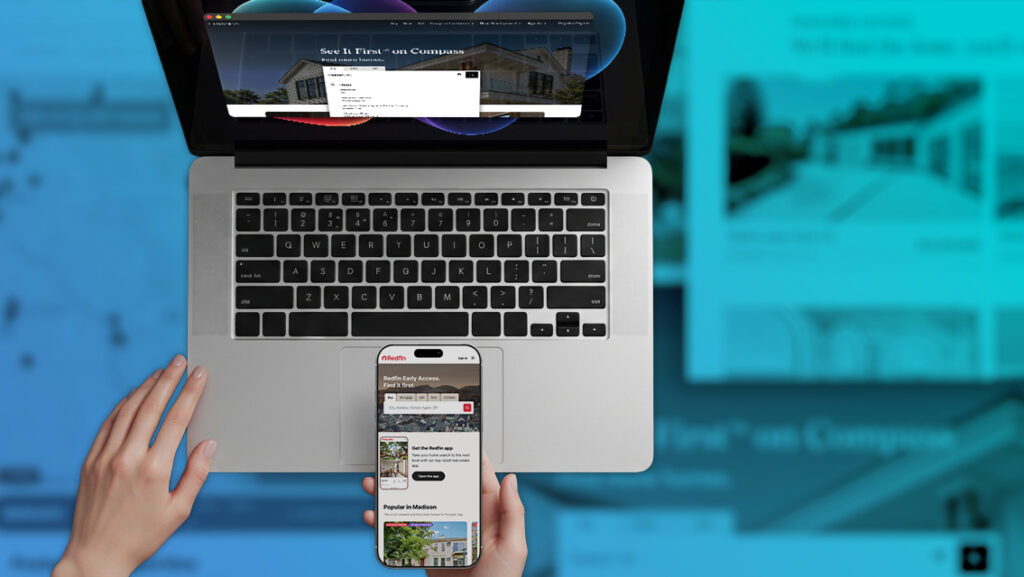
#1: Compass
A premium example of modern real estate web design with elevated branding, strong listing presentation, and intuitive local search. (https://www.compass.com)
#2: Zillow
Best-in-class property search functionality, map usability, and saved listing tools that keep users engaged. (https://www.zillow.com)
#3: The Agency
Luxury-focused branding, strong visual storytelling, and elevated market positioning make this a standout. (https://www.theagencyre.com)
#4: Redfin
Excellent mobile usability, seamless search filters, and clear lead capture throughout the user journey. (https://www.redfin.com)
#5: SERHANT.
A strong example of personality-driven real estate branding paired with highly polished digital storytelling. (https://serhant.com)
Final Thoughts
Having a close connection to the real estate industry through my mom has made this especially clear to me: clients aren’t just choosing a house, they’re choosing the person they trust to guide them through one of the biggest decisions they’ll make. A website should communicate that trust from the very first interaction. The best real estate web design combines credibility, beautiful listing presentation, intuitive search, and strategic lead capture.
When your site makes it easy for buyers and sellers to trust your expertise and take the next step, it becomes one of your most powerful business development tools.