A good looking website is not enough. If it does not guide users to take action, it is not doing its job.
Conversion focused web design is about turning visitors into customers. With the right balance of strategy and user experience, every element works to improve website conversions.
Why Is Conversion Focused Web Design Important?
Getting traffic is only half the battle. What matters is what users do once they land on your site.
A higher conversion rate means you are getting more value from your existing traffic, giving your business a strong competitive advantage.
Conversion rate optimization is also one of the most cost effective ways to grow. Small updates like improving a call to action or simplifying your layout can increase website conversions without a large investment.
A well designed website also builds trust. When your user experience is clear and intuitive, your brand feels more credible and professional.
Businesses that combine strong visuals with intentional branding often create stronger customer experiences overall. This article on branding and accessibility explores how thoughtful design improves trust and consistency.
Tips To Improve Your Conversion Rates
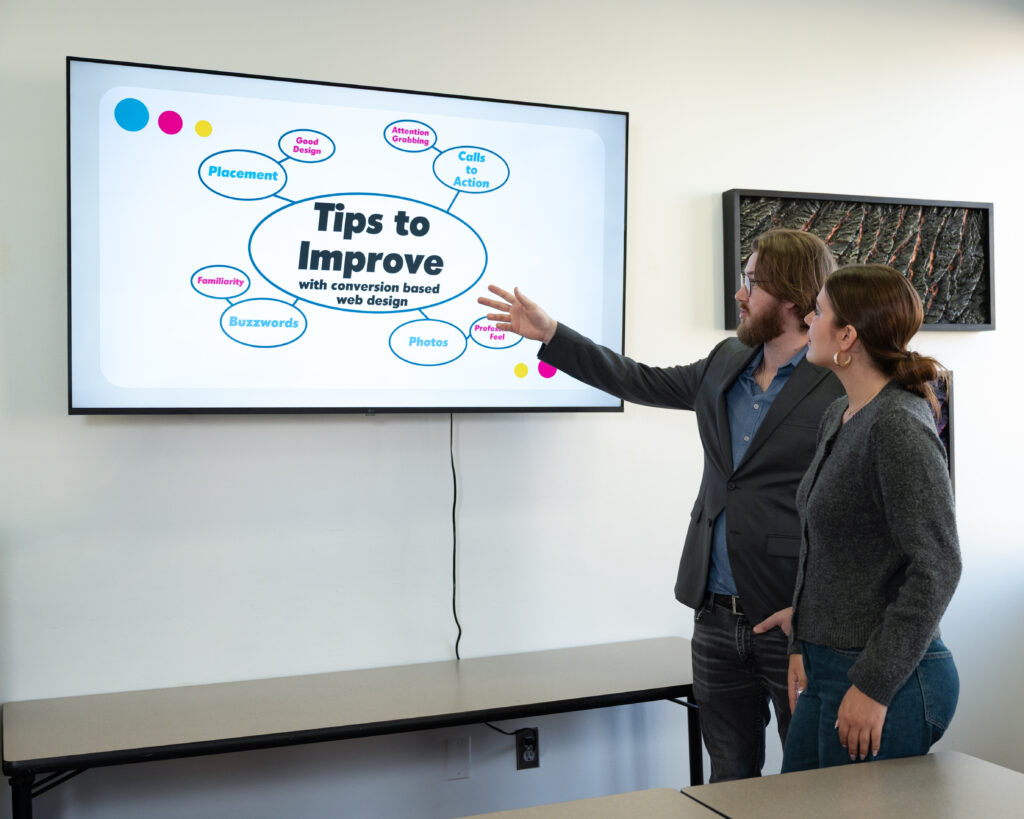
Improving website conversions often comes down to simple, intentional design choices.
Create Clear Calls To Action
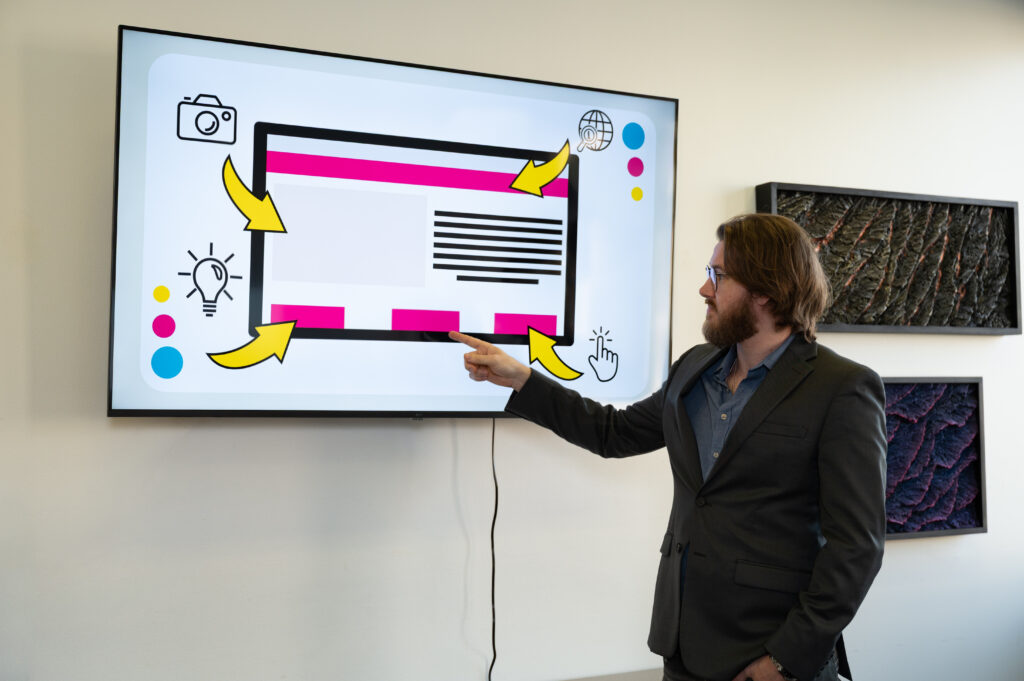
Grouping key elements like forms or calls to action into clear sections helps guide users toward taking the next step. According to our IH5 Web Principles, we stress the importance of a Call To Action (CTA) because it is important to make clear what action you want someone to take on your website.
Use Color and Branding Strategically
Color plays a major role in conversion focused web design. Using contrast and consistent branding helps draw attention to important areas while strengthening your overall user experience.
Strong branding and thoughtful graphic design also build trust, which is why intentional visual consistency matters across every page. Branding isn’t just the colors used, it’s about creating a consistent identity. We often stress the importance of your website not just being consistent page to page, but also with your other marketing collateral. It is something that is easy to miss.
Improve Content Hierarchy
Clear content hierarchy makes your website easier to scan. A smoother user experience often leads to stronger engagement, lower bounce rates, and higher conversion rates.
Typography also plays a major role in user experience. Strong typography improves readability, guides attention, and reinforces your brand’s professionalism. This IH Concepts article on why typography matters in web design explains how thoughtful typography choices impact usability and engagement.
Additional UX typography research from the Interaction Design Foundation further highlights how typography influences readability and user behavior online.
Use Visual Cues To Guide Behavior
Visual cues can guide behavior in subtle ways. Directional design elements and imagery help lead users toward your main conversion goals without overwhelming them.
Prioritize Whitespace and Simplicity
Whitespace improves readability and reduces overwhelm. A clean layout keeps users focused and supports a stronger overall user experience.
Build Trust With Social Proof
Adding trust elements like testimonials, reviews, or certifications can increase conversions by reducing doubt and building confidence.
Research from BrightLocal consistently shows that reviews strongly influence purchasing behavior.
Create Urgency Thoughtfully
Creating urgency through limited offers or exclusive deals can also support higher conversion rates by encouraging users to act quickly.
Optimize for Mobile Performance
Mobile optimization is essential. A responsive, fast loading site ensures your user experience is seamless across devices and prevents lost conversions. IH Concepts’ outlined how important it is for a website to be easy to use, as well as having speedy load times. The number of people using a mobile device rather than a desktop to surf the web has only grown since our 2018 Blog on the subject noted.
Google Search Central also emphasizes mobile usability as a major ranking factor.
Building Your Own Conversion Optimized Website

Effective conversion focused web design starts with understanding your audience.
Map Out the User Journey
Mapping out the user journey allows you to identify friction points that may be hurting your conversion rate.
Use A B Testing and Data Insights
A B testing is a key part of conversion rate optimization. Testing different layouts, messaging, or calls to action helps you understand what drives the best results.
Tools like Hotjar provide insight into real user behavior through heatmaps and session recordings.
At IH Concepts, we often bring people in for usability studies to observe how they are using the website.
Align Content With User Intent
Matching your content with user intent is critical. When your messaging aligns with what users are searching for, engagement and conversion rates improve.
Businesses that combine SEO with strong web design often see stronger long term performance. This article on how websites continue evolving alongside user expectations offers additional insight.
Commit To Ongoing Optimization
Ongoing optimization is what drives long term success. Continuously tracking, testing, and refining your site ensures your conversion strategy keeps performing.
Conclusion
Conversion focused web design is about more than appearance. It is about creating a clear, strategic user experience that drives action.
With the right approach to conversion rate optimization, your website becomes a powerful tool for growth.
If you are looking to improve your results, exploring additional website strategy and design resources can be a valuable next step.